
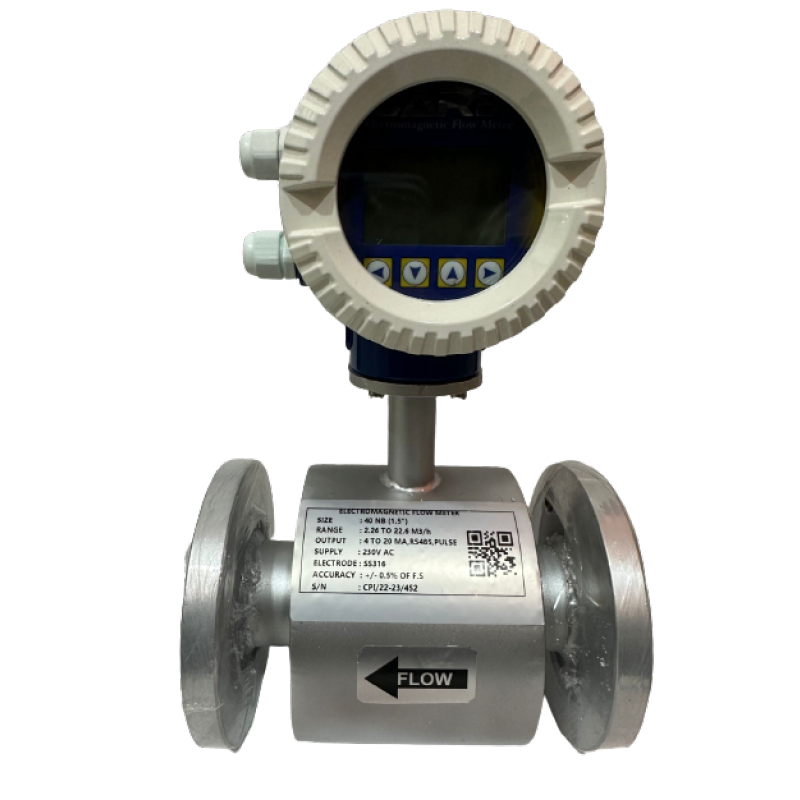
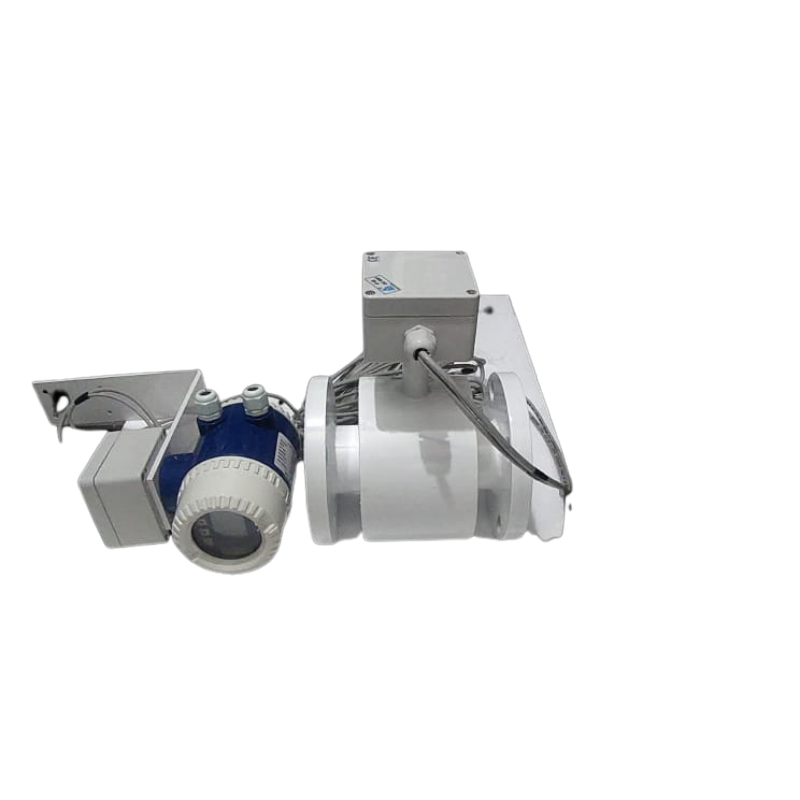
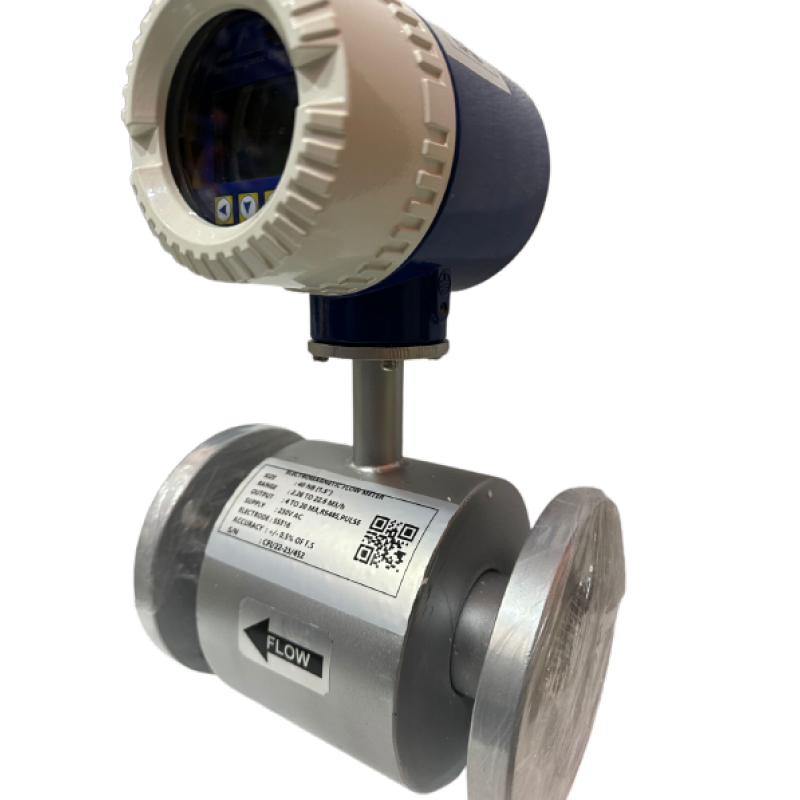
Electromagnetic Flow Meter Manufacturer, Supplier and Exporter
CPI Technology Private Limited offers the Electromagnetic Flow Meter for accurate flow measurement of electrically conductive liquids in industrial pipelines. The instrument is suitable for clean liquids, dirty liquids, wastewater, sewage, milk, corrosive fluids and compatible slurries.
The meter provides an unobstructed internal flow path, resulting in negligible pressure loss across the measuring tube. It is designed for applications where dependable liquid-flow measurement is required without installing a mechanical obstruction inside the pipeline.
The offered primary flow tube is suitable for media pressures up to 20 kg/cm² and media temperatures from 0°C to 120°C. Material options include an SS304 non-magnetic flow tube, SS316, SS316L or Hastelloy C electrodes, PTFE or hard-rubber lining and a polyurethane-painted carbon-steel coil housing.
CPI Technology Private Limited serves process plants, original equipment manufacturers, engineering contractors, project consultants and procurement teams as a manufacturer, supplier and exporter of flow-measurement instruments from Ahmedabad, Gujarat, India.
What Is an Electromagnetic Flow Meter?
An electromagnetic flow meter is an industrial instrument used to measure the volumetric flow rate of an electrically conductive liquid passing through a pipeline.
The meter operates without a turbine, paddle, restriction plate or other moving obstruction inside the flow path. Instead, it measures liquid velocity using a magnetic field and electrodes installed around the flow tube.
When a conductive liquid moves through the magnetic field, an electrical signal is generated. The electrodes detect this signal, which is related to the velocity of the liquid flowing through the measuring tube.
The measured velocity can then be used by the flow-meter electronics to determine the flow rate through the pipe.
Because the method depends on electrical conductivity, the liquid must be conductive. The instrument is not intended for measuring gases and is unsuitable for non-conductive liquids unless their conductivity meets the applicable meter requirement.
Product Overview
The Electromagnetic Flow Meter is intended for applications involving electrically conductive fluids.
Suitable media may include:
-
Water
-
Wastewater
-
Sewage
-
Milk
-
Slurries
-
Dirty liquids
-
Compatible corrosive liquids
-
Other electrically conductive process fluids
The flow tube has no internal mechanical element projecting into the liquid path. This unobstructed construction helps minimize permanent pressure loss and reduces the possibility of mechanical blockage caused by internal moving parts.
The typical stated accuracy is ±0.5% of full scale.
The primary flow tube can be selected with different electrode and liner materials according to the process medium. Available electrode materials include SS316, SS316L and Hastelloy C, while the internal lining can be supplied in PTFE or hard rubber.
The final configuration should be selected after reviewing the liquid composition, conductivity, media pressure, operating temperature and material compatibility.
Key Features
-
Suitable for electrically conductive liquids.
-
Applicable to clean and dirty liquid service.
-
Can be considered for wastewater, sewage, milk and slurry measurement.
-
Suitable for compatible corrosive liquids.
-
Unobstructed internal flow passage.
-
Negligible pressure drop across the flow tube.
-
No internal moving flow-measuring parts.
-
Typical accuracy of ±0.5% of full scale.
-
Fluid viscosity has minimal additional influence compared with flow through the pipe itself.
-
Suitable for industrial pipeline flow measurement.
-
Primary flow-tube pressure rating of 20 kg/cm².
-
Media-temperature range from 0°C to 120°C.
-
SS304 non-magnetic pipe construction.
-
Flow tube supplied without painting.
-
SS316, SS316L or Hastelloy C electrode options.
-
PTFE or hard-rubber inner-lining options.
-
Carbon-steel coil housing.
-
Polyurethane-painted coil housing.
-
Available from an industrial flow-instrument manufacturer and supplier in Ahmedabad.
Technical Specifications
| Specification | Details |
|---|---|
| Product | Electromagnetic Flow Meter |
| Measurement | Flow rate of electrically conductive liquids |
| Measuring Principle | Electromagnetic flow measurement |
| Typical Accuracy | ±0.5% of full scale |
| Suitable Media | Electrically conductive liquids |
| Media Examples | Slurries, sewage, milk, water, wastewater, dirty liquids and compatible corrosive liquids |
| Media Pressure | Up to 20 kg/cm² |
| Media Temperature | 0°C to 120°C |
| Flow-Tube Pipe Material | SS304 |
| Pipe Construction | Non-magnetic and without painting |
| Electrode Materials | SS316, SS316L or Hastelloy C |
| Inner-Lining Options | PTFE or hard rubber |
| Coil-Housing Material | Carbon steel |
| Coil-Housing Finish | Polyurethane painted |
| Flow Path | Unobstructed |
| Pressure Drop | Negligible |
| Gas-Flow Measurement | Not suitable |
| Liquid Requirement | Liquid must be electrically conductive |
Working Principle
The instrument works on the electromagnetic principle of flow measurement.
A magnetic field is created across the measuring tube. When an electrically conductive liquid passes through this magnetic field, a voltage is generated across the liquid.
Electrodes mounted in the flow tube detect the generated signal. The signal changes according to the velocity of the liquid moving through the pipe.
The flow-meter electronics use this measured signal to determine the liquid-flow rate.
Since the measuring principle does not require a rotating or obstructing element inside the pipe, the liquid can pass through the meter with minimal restriction.
This operating principle makes the instrument particularly useful where the process contains:
-
Suspended solids
-
Dirty liquids
-
Wastewater
-
Sewage
-
Slurry
-
Fluids that could affect mechanical flow-meter components
Correct measurement depends on the liquid having sufficient electrical conductivity and the measuring tube remaining properly filled during operation.
Advantages of an Electromagnetic Flow Meter
Unobstructed Flow Path
The flow tube does not contain a mechanical obstruction in the main liquid path.
This allows the liquid to move through the meter in a manner similar to its flow through the connected pipeline.
The unobstructed design is beneficial for liquids containing suspended matter or solids that could otherwise collect around a mechanical measuring element.
Negligible Pressure Drop
Because the measuring tube does not create a major restriction, the permanent pressure loss across the instrument is negligible.
This can be advantageous in pumping and process systems where maintaining line pressure is important.
A low pressure drop can also reduce the additional pumping effort associated with restrictive flow-measuring technologies.
Suitable for Clean and Dirty Liquids
The instrument can measure both clean and dirty conductive liquids.
It may therefore be selected for applications involving:
-
Clean process water
-
Wastewater
-
Sewage
-
Milk
-
Slurries
-
Compatible corrosive fluids
The exact construction must be selected according to the medium.
No Moving Measuring Parts
The flow-measuring section does not depend on rotating mechanical components.
This avoids issues associated with mechanical wear of turbines, rotors or paddles within the liquid stream.
Actual maintenance requirements still depend on the process, lining condition, electrodes, installation and operating environment.
Typical Accuracy of ±0.5% F.S.
The stated typical accuracy is ±0.5% of full scale.
This provides plant engineers and project buyers with a defined performance reference when evaluating the meter for their flow-measurement requirement.
The final performance should be reviewed against the selected model, range and approved product documentation.
Limited Additional Influence from Viscosity
The effect of liquid viscosity on flow through the meter is essentially similar to the effect of viscosity on flow through the pipeline itself.
The instrument does not rely on a freely rotating internal measuring part whose movement could be directly restricted by viscosity.
Useful for Slurry Applications
An unobstructed flow path can be useful when measuring compatible conductive slurries.
Material selection remains important because the liner and electrode surfaces may be exposed to chemical or mechanical wear depending on the nature of the slurry.
Broad Industrial Application
The meter can be used across industries handling conductive process liquids.
Its application range includes water, wastewater, dairy liquids, chemical fluids, sewage and slurry-handling systems.
Limitations and Disadvantages
Not Suitable for Gas Measurement
The magnetic measuring principle is intended primarily for liquids.
The meter does not work effectively for measuring gas-flow rate and should not be selected as a gas flow meter.
Applications involving compressed air, natural gas, process gas or other gaseous media require a different flow-measurement technology.
Liquid Must Be Electrically Conductive
The process liquid must have sufficient electrical conductivity for the electrodes to detect the generated flow signal.
Non-conductive fluids cannot normally be measured using this principle.
The conductivity of the liquid should therefore be confirmed before selecting the instrument.
Material Compatibility Must Be Verified
The flow tube, electrodes and liner are exposed to the process conditions.
The chosen electrode and lining materials must be compatible with:
-
Liquid composition
-
Chemical concentration
-
Operating temperature
-
Pressure
-
Abrasive content
-
Cleaning chemicals
-
Process contaminants
SS316, SS316L, Hastelloy C, PTFE and hard rubber have different application characteristics. Selection should be based on the actual process medium rather than general preference.
Correct Installation Is Important
Measurement performance can be affected by improper piping arrangement, incomplete pipe filling, trapped air, disturbed flow or unsuitable electrode orientation.
The meter should be installed according to the approved manufacturer instructions and engineering practice.
Primary Flow Tube Construction
The primary flow tube is the section installed directly in the process pipeline.
Its main construction elements include:
SS304 Flow Tube
The pipe is manufactured from non-magnetic SS304.
The supplied specification states that the pipe is provided without painting.
The non-magnetic construction is relevant to the electromagnetic measuring arrangement.
Electrode Options
Available electrode materials include:
-
SS316
-
SS316L
-
Hastelloy C
The electrodes are in contact with the process liquid and detect the measurement signal generated during flow.
The electrode material should be selected according to chemical compatibility with the liquid.
Inner-Lining Options
The measuring tube can be supplied with:
-
PTFE lining
-
Hard-rubber lining
The liner separates the process liquid from the main metal body of the flow tube and forms part of the wetted construction.
The correct liner should be selected according to process temperature, chemical compatibility and service conditions.
Carbon-Steel Coil Housing
The coil housing is manufactured from carbon steel and finished with polyurethane paint.
The housing protects the electromagnetic coil assembly around the flow tube.
Media Pressure and Temperature
The stated maximum media pressure is:
20 kg/cm²
The stated media-temperature range is:
0°C to 120°C
Both parameters must be considered during technical selection.
The normal operating pressure, maximum pressure, process surges and test conditions should remain within the approved pressure rating.
Similarly, the operating, cleaning and temporary process temperatures must be considered when selecting the liner and electrode construction.
The meter should not be exposed to pressure or temperature beyond the approved specification.
Applications
The Electromagnetic Flow Meter can be used for precise measurement of electrically conductive liquids in industrial pipelines.
Typical applications include:
-
Water-flow measurement
-
Wastewater-flow monitoring
-
Sewage-flow measurement
-
Milk-flow measurement
-
Conductive slurry measurement
-
Dirty-liquid flow monitoring
-
Compatible chemical-liquid measurement
-
Effluent-flow measurement
-
Process-water measurement
-
Utility-water monitoring
-
Treatment-plant flow measurement
-
Liquid-transfer systems
-
Pumping systems
-
Industrial process pipelines
-
Plant water-distribution networks
-
Conductive-liquid batching and transfer
-
Process-skid integration
-
OEM equipment requiring liquid-flow measurement
Actual suitability depends on the liquid conductivity, process pressure, media temperature, pipe condition, electrode material and liner selection.
Industries Served
The flow meter may be considered for applications in industries such as:
-
Water-treatment plants
-
Wastewater-treatment plants
-
Sewage-treatment facilities
-
Dairy-processing plants
-
Food-processing facilities
-
Chemical-processing plants
-
Effluent-treatment plants
-
Process-equipment manufacturing
-
Industrial utility systems
-
Slurry-handling plants
-
Engineering procurement and construction projects
-
Pumping and water-distribution projects
-
Original equipment manufacturing
-
Factory process automation
Each application should be reviewed according to the actual liquid and operating conditions.
Electrode Material Selection
Electrode material selection is important because the electrodes remain exposed to the process liquid.
SS316 Electrodes
SS316 electrodes can be considered for liquids compatible with this stainless-steel grade.
SS316L Electrodes
SS316L electrodes may be selected where the project or process specification requires this material.
Hastelloy C Electrodes
Hastelloy C can be considered where the process conditions require the stated alloy option.
The presence of an available electrode material does not automatically confirm suitability for every chemical.
The buyer should provide:
-
Liquid name
-
Chemical composition
-
Concentration
-
Operating temperature
-
Pressure
-
Presence of solids
-
Cleaning method
-
Corrosion conditions
Material compatibility should be confirmed before order placement.
PTFE and Hard-Rubber Lining Options
PTFE Lining
PTFE lining is available as an inner-lining option.
It may be considered where the process and temperature conditions are compatible with PTFE construction.
Hard-Rubber Lining
Hard-rubber lining is also available.
It may be considered for compatible water, wastewater, slurry or other conductive-liquid applications.
The choice between PTFE and hard rubber should be based on the actual medium, temperature and service conditions.
Buyer Benefits
Reduced Flow Restriction
The open flow-tube construction minimizes obstruction in the pipeline.
Minimal Permanent Pressure Loss
Negligible pressure drop helps preserve the available process pressure.
Suitable for Difficult Liquids
The meter can be considered for dirty liquids, sewage and compatible slurries that may be challenging for some mechanical meters.
Multiple Wetted-Material Options
SS316, SS316L and Hastelloy C electrodes, together with PTFE and hard-rubber liners, support application-based selection.
Industrial Pressure Capability
The primary flow tube is specified for media pressure up to 20 kg/cm².
Wide Media-Temperature Range
The stated process-temperature range is 0°C to 120°C.
Defined Typical Accuracy
The typical accuracy of ±0.5% full scale provides a clear technical reference for buyers.
Suitable for OEM and Project Integration
The instrument can be considered for process skids, water systems, treatment plants, machinery and industrial pipeline projects.
Selection Considerations
Before ordering, the buyer should confirm:
-
Liquid name
-
Electrical conductivity
-
Minimum flow rate
-
Normal flow rate
-
Maximum flow rate
-
Pipe size
-
Pipe material
-
Operating pressure
-
Maximum pressure
-
Operating temperature
-
Electrode material
-
Lining material
-
Installation orientation
-
Required quantity
-
Application
-
Delivery location
The meter should not be selected only on the basis of pipeline size.
Fluid properties, flow conditions and construction materials must also be reviewed.
Installation Considerations
The instrument should be installed by qualified personnel according to the approved product instructions.
The piping system should be reviewed for:
-
Full-pipe conditions
-
Proper meter orientation
-
Flow direction
-
Adequate upstream and downstream piping
-
Trapped-air possibility
-
Electrode position
-
Mechanical stress
-
Pipe vibration
-
Earthing requirements
-
Correct flange alignment
-
Accessible maintenance location
The flow tube should not be used to correct misaligned piping.
The meter should be protected from conditions outside its specified pressure and temperature limits.
Information Required for Quotation
To receive a technically relevant quotation, provide:
-
Process liquid
-
Electrical conductivity, where available
-
Pipe size
-
Required flow range
-
Normal flow rate
-
Maximum flow rate
-
Media pressure
-
Media temperature
-
Electrode material
-
Inner-lining preference
-
Pipeline connection details
-
Required quantity
-
Installation location
-
Delivery destination
-
Export destination, where applicable
-
Required documentation
Complete process information helps ensure correct material and range selection.
Why Choose CPI Technology Private Limited?
CPI Technology Private Limited serves industrial customers as a manufacturer, supplier and exporter of process-measurement instruments from Ahmedabad, Gujarat, India.
We work with plant engineering teams, OEMs, EPC companies, consultants, contractors, utility operators and procurement departments.
Application-Based Instrument Selection
Flow-meter selection requires review of the liquid, conductivity, operating pressure, temperature, pipe size and material compatibility.
Our team evaluates the submitted application details before preparing the technical and commercial offer.
Manufacturer and Supplier in Ahmedabad
Our Ahmedabad base supports industrial customers throughout Gujarat and other manufacturing regions in India.
Buyers may submit their data sheets, flow requirements, process details or project bills of quantities.
Support for Water and Process Applications
We support enquiries involving water, wastewater, sewage, milk, slurry and compatible process liquids.
Project and OEM Supply
Multiple meter sizes and project quantities can be reviewed according to the customer’s instrument schedule or process requirement.
Export Supply from India
CPI Technology Private Limited also serves international buyers, distributors, machinery manufacturers and engineering project companies.
Export enquiries should include the destination, quantity and complete technical specifications.
Electromagnetic Flow Meter Supplier in Gujarat
Industrial buyers in Ahmedabad, Vadodara, Ankleshwar, Bharuch, Surat, Vapi, Rajkot and other manufacturing centres can submit enquiries for magnetic flow-measurement requirements.
We support:
-
Process plants
-
Water-treatment companies
-
Effluent-treatment plants
-
Dairy-equipment manufacturers
-
Chemical plants
-
Pumping-system contractors
-
Process-skid manufacturers
-
Utility companies
-
EPC contractors
-
Engineering consultants
-
Industrial distributors
The final configuration will depend on the liquid, flow range, line size, temperature and construction requirements.
Request a Quotation
For pricing and availability, send us the process liquid, pipe size, flow range, operating pressure, media temperature, preferred electrode material, lining requirement, quantity and delivery location.
The offered primary flow tube is available with an SS304 pipe, SS316, SS316L or Hastelloy C electrodes, PTFE or hard-rubber lining and a polyurethane-painted carbon-steel coil housing.
CPI Technology Private Limited will review the submitted requirement and provide an appropriate technical and commercial proposal.
Frequently Asked Questions
1. Which liquids can an Electromagnetic Flow Meter measure?
It can measure electrically conductive liquids such as water, wastewater, sewage, milk, compatible slurries, dirty liquids and suitable corrosive fluids.
2. Can the meter measure gas flow?
No. The electromagnetic measuring principle is intended primarily for conductive liquids and does not work effectively for gas-flow measurement.
3. Does the liquid need to be conductive?
Yes. The process liquid must have sufficient electrical conductivity for the meter to generate and detect the flow-related signal.
4. What is the typical accuracy?
The supplied specification states a typical accuracy of ±0.5% of full scale.
5. What media pressure and temperature are supported?
The primary flow tube is specified for media pressure up to 20 kg/cm² and media temperature from 0°C to 120°C.
6. Which electrode and lining materials are available?
Available electrode materials include SS316, SS316L and Hastelloy C. The inner lining can be supplied in PTFE or hard rubber.
7. Does the meter create pressure loss?
The unobstructed flow tube creates negligible pressure drop compared with restrictive flow-measuring devices.